

Looking Forward
Why 2026 Will Define Steel’s Climate Future

Looking Forward: Why 2026 Will Define Steel’s Climate Future
As we launch into 2026, the steel industry stands at an inflection point. The momentum around decarbonization has shifted from aspiration to implementation. The question is no longer whether steel will transform, but which companies will lead that transformation, and which will be left behind.
Over the past few months, this newsletter has explored the foundations of that transformation: the policy frameworks that reward verified outcomes, the procurement practices that distinguish genuine progress from marketing claims, and the real-world results that prove significant emissions reductions are achievable today.
What We’ve Learned
The conversations I’ve had with policymakers, procurement professionals, and industry leaders throughout 2025 reveal a consistent pattern: the market is ready for verification. Buyers want reliable data to support their sustainability commitments. Investors need transparent metrics to allocate capital effectively. Regulators are designing frameworks that reward documented performance over projected reductions. Most importantly, demand needs to make this investment worth it.
Steel Dynamics’ 9% verified reduction in carbon intensity demonstrates what’s possible when companies embrace outcomes-based accountability. Their success came not from revolutionary technologies or decades-long facility transformations, but from rigorous measurement, strategic investments in proven improvements, and independent verification of results.
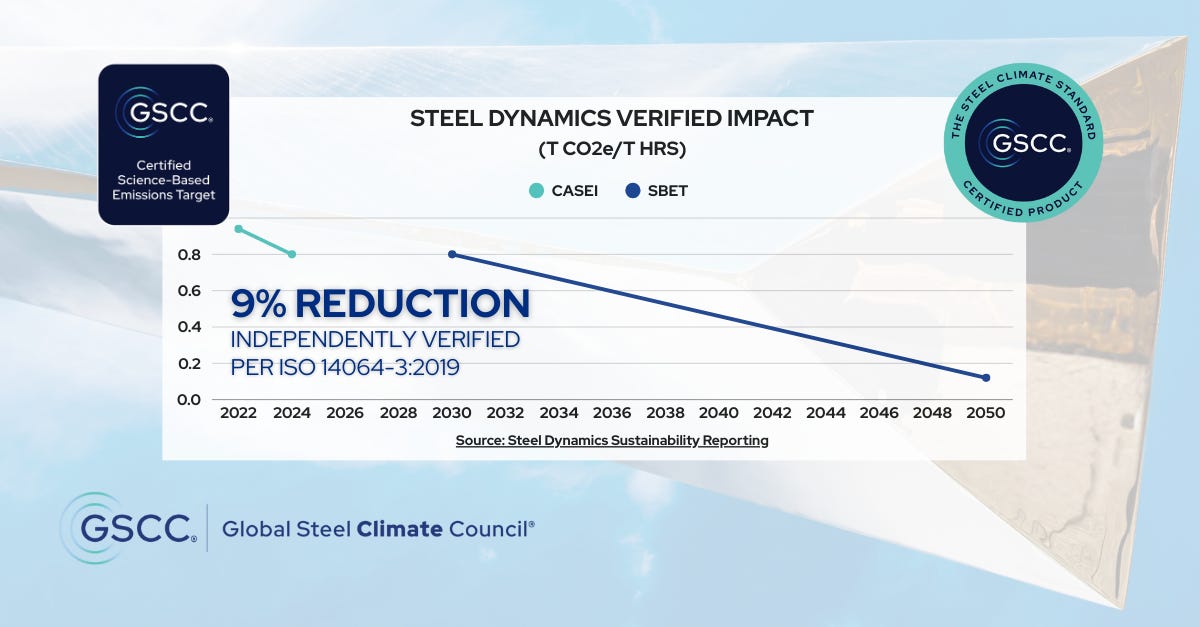
This matters because it shows the path forward for the entire industry. While breakthrough technologies will play important roles in steel’s long-term decarbonization, significant progress is achievable now with current technologies and comprehensive measurement.
Why 2026 Is Different
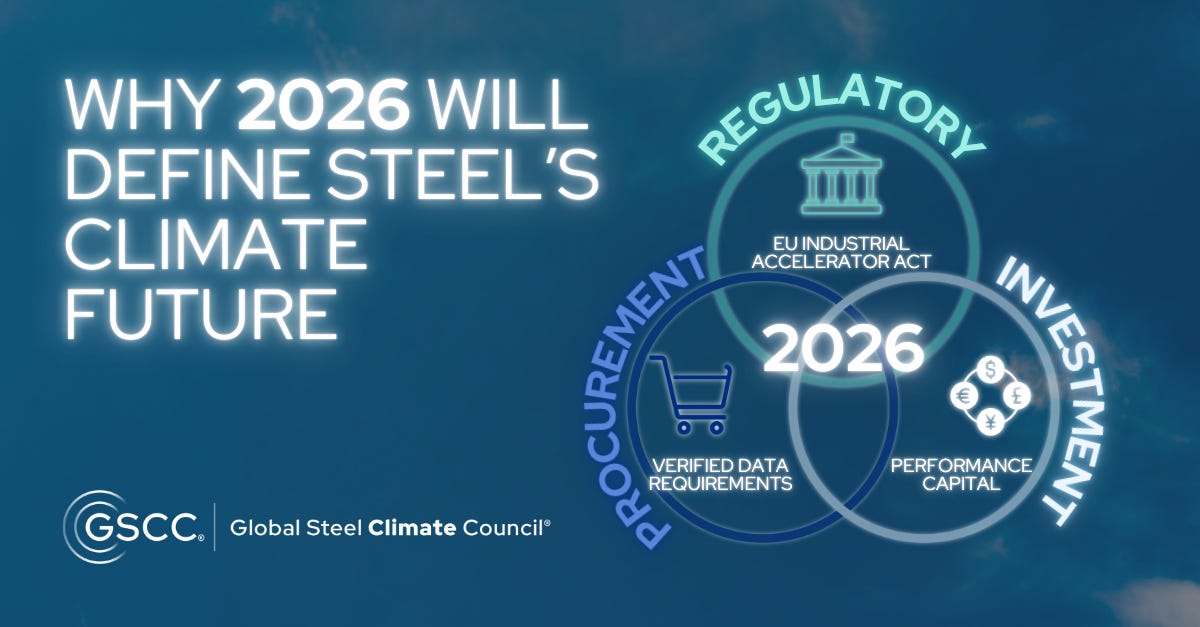
Several factors converge to make 2026 a defining year for steel’s climate future.
First, regulatory frameworks are moving from development to implementation. The European Union’s highly anticipated Industrial Accelerator Act focuses on creating market demand for low emission steel. Industrial decarbonization policies Asia/Pacific are advancing from proposals to requirements. These regulations increasingly are defining “green steel” and demanding verified emissions data, thereby creating competitive advantages for companies that have already established robust measurement and verification systems.
Second, procurement practices are evolving rapidly. Major buyers across automotive, construction, and infrastructure sectors are incorporating verified carbon intensity into supplier selection criteria, but governments are using their procurement power to set new buying terms. The procurement professionals who master sustainability due diligence (asking the right questions about emissions scope, verification methodology, and reduction trajectories) will drive better environmental outcomes while strengthening supply chain partnerships.
Third, investment decisions are shifting toward verified performance. Capital markets are developing more sophisticated approaches to evaluating climate risks and opportunities across industrial sectors. We advocate that companies that can demonstrate verified emissions reductions backed by independent audits should have equal access to market opportunities as those relying solely on commitments.
The First-Mover Advantage
The companies that moved early to establish verified baselines and reduction trajectories are experiencing advantages that will compound over time. They’ve built trust with customers through transparent, verified data. They’ve developed operational expertise in emissions management that drives continuous improvement. And they’ve positioned themselves favorably as regulations tighten and buyer requirements become more sophisticated.
These first-mover advantages create switching costs and loyalty that protect market position. Once a buyer and supplier have established verified baseline data and joint improvement targets, changing suppliers means starting the verification process over. This stability benefits both parties while ensuring continued environmental progress.
For companies that haven’t yet embraced outcomes-based verification, 2026 represents both urgency and opportunity. The regulatory and market environment will increasingly favor verified performance. The companies that act now will build the systems and relationships necessary to thrive in that environment.
What to Watch in 2026
Several developments will shape steel’s transformation in the coming year:
Policy implementation: How effectively do new regulations incorporate verified outcomes? Do they maintain technological neutrality while driving genuine emissions reductions?
Market dynamics: How quickly do major buyers adopt sophisticated procurement practices that reward verified performance? Do premium pricing opportunities emerge for certified low-carbon steel?
Technology deployment: Which production pathways demonstrate the most significant verified reductions? How do companies balance breakthrough innovations with improvements to existing facilities?
International coordination: Can the industry establish global standards that enable fair competition while supporting climate goals? Will regional approaches fragment the market or converge toward common frameworks?
Looking Ahead
This newsletter will continue exploring these questions throughout 2026. We’ll analyze policy developments, share procurement best practices, spotlight verified member achievements, and provide the intelligence necessary for strategic decision-making during industry transformation.
The steel industry’s decarbonization journey is entering its most critical phase. The companies that embrace verified outcomes over aspirational targets will lead that transformation. The question for every steel producer, buyer, and policymaker is simple: Will you help define steel’s climate future, or will you be defined by it?
What topics would you like us to prioritize in upcoming editions?
Comment below or message us and let us know.
Visit our website: GlobalSteelClimateCouncil.org | Connect with us on: LinkedIn
Bridging industry expertise with policy innovation to accelerate steel sector decarbonization.
Very good information. Glad to see the GSCC's high level of engagement with EU policies that can have tremendous impact on the global steel industry’s lower carbon future.