

Verification as Policy
Why Outcomes-Based Standards Strengthen Climate Action

Verification as Policy: Why Outcomes-Based Standards Strengthen Climate Action
As governments worldwide advance toward Paris Agreement commitments, a crucial opportunity emerges in industrial decarbonization. The question is no longer whether to act, but how to ensure our climate policies drive genuine, measurable progress rather than well-intentioned promises.
The steel industry offers a compelling case study. Accounting for approximately seven percent of global CO₂ emissions, steel remains essential for infrastructure, transportation, and renewable energy systems. The sector’s transformation will determine whether we achieve our 1.5°C targets, but only if we can accurately measure and verify our progress.
The Policy Opportunity
Current regulatory frameworks increasingly recognize the value of verified outcomes over projected reductions. The European Union’s evolving discussions on taxonomy and climate initiatives, for example, reflect a growing alignment between policy goals and measurable results. This shift creates opportunities for standards that support evidence-based policy development while enabling fair competition among steel producers pursuing different technological pathways.
What makes this moment particularly significant is the convergence of policy ambition with practical implementation tools. Governments need reliable data to design effective regulations. Buyers need transparent information to make informed procurement decisions. Investors need verified performance metrics to allocate capital toward genuine innovation. An outcomes-based verification framework addresses all three needs simultaneously.
The GSCC Approach
The Global Steel Climate Council’s methodology centers on verified, absolute emissions reductions across the entire production process. Our technology-neutral framework measures actual performance rather than rewarding specific production methods, enabling innovation across diverse steel manufacturing approaches—from integrated blast furnaces to electric arc furnaces to emerging hydrogen-based direct reduction.
Third-party verification ensures data accuracy and credibility. Independent auditors confirm emissions measurements, creating the transparency necessary for effective policy integration and market confidence. This verification process aligns with existing reporting requirements while providing the additional rigor that climate accountability demands.
The framework’s real-world application demonstrates its practicality. GSCC-certified members operate across multiple continents using different production technologies, yet all meet the same rigorous verification standards. This global applicability makes the framework valuable for international policy coordination while respecting regional manufacturing realities.
Proven Results
The business case for outcomes-based verification extends beyond regulatory compliance.
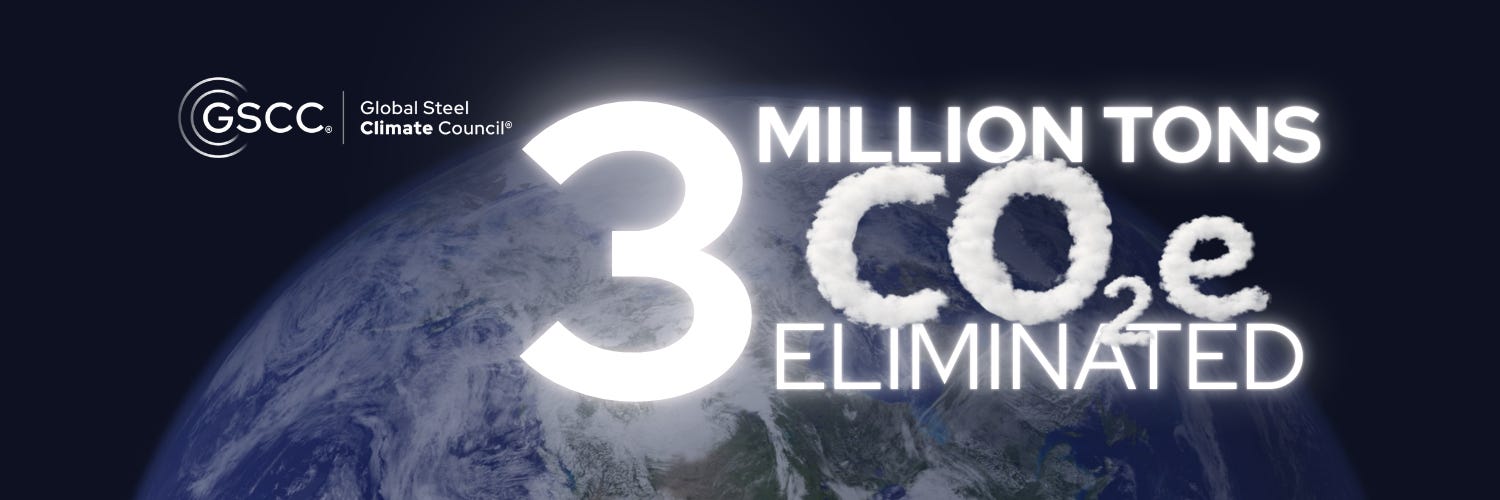
GSCC-certified members have eliminated nearly 3 million tons of carbon emissions, verified reductions from steel already produced and delivered to customers.
These are not projections or commitments, but documented results from operating facilities.
This verified performance creates a competitive advantage that drives continued participation. Downstream buyers gain confidence in sustainability claims backed by independent verification. Procurement teams can differentiate between suppliers based on actual environmental performance rather than marketing assertions. Investment decisions benefit from transparent, comparable data across different producers and technologies.
The verification process itself generates operational insights. Companies report that the rigorous measurement requirements reveal efficiency opportunities they hadn’t previously identified. The framework transforms emissions accounting from a compliance exercise into a strategic tool for continuous improvement.
Policy Integration
Incorporating outcomes-based verification into climate regulation offers several advantages for policymakers.
First, it creates clear incentives for genuine emissions reductions while maintaining technological neutrality.
Second, it provides enforcement mechanisms through independent verification rather than relying solely on self-reporting.
Third, it enables international coordination by establishing common measurement standards that work across different regulatory jurisdictions.
The framework supports long-term policy effectiveness by rewarding actual progress toward 1.5°C targets. As regulations tighten over time, verified baselines and reduction trajectories provide the data foundation for evidence-based policy adjustments. This approach strengthens climate action by ensuring policies drive real-world emissions reductions rather than accounting optimizations.
Moving Forward
The steel industry’s transformation demonstrates that outcomes-based verification can bridge the gap between climate ambition and industrial reality. By focusing on verified results rather than promises, we create the accountability needed to achieve our climate goals while supporting the economic vitality of an essential industry.
As policymakers design the next generation of climate regulations, outcomes-based verification offers a proven framework for ensuring that good intentions translate into measurable progress. The question isn’t whether to verify. It’s how quickly we can scale verification across the industries that will determine our climate future.
What topics would you like us to prioritize in upcoming editions?
Comment below or message us and let us know.
Visit our website: GlobalSteelClimateCouncil.org | Connect with us on: LinkedIn
Bridging industry expertise with policy innovation to accelerate steel sector decarbonization.